About

Who we are.

P/ PRABHAVEE is an advisory and strategy consulting practice based in Delhi. We advance human rights and responsible business through strategic advisory, multi-stakeholder initiatives, facilitation, training and strategic programmes.
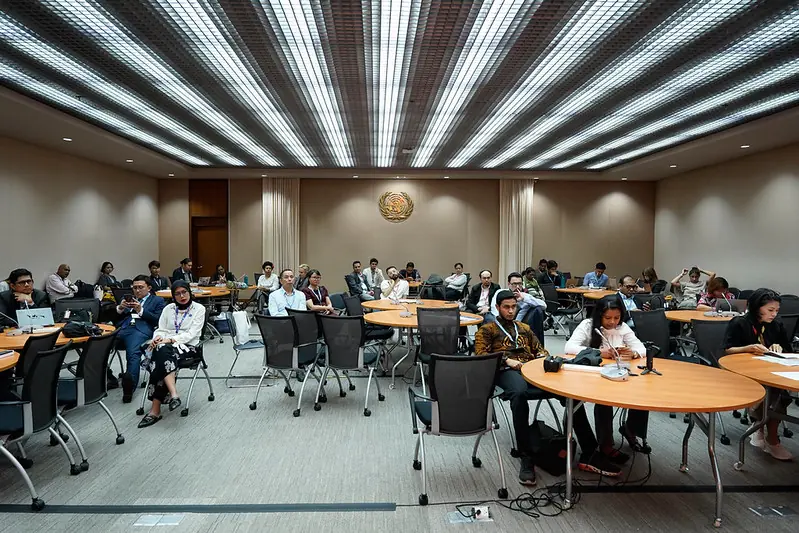
A working hall at the UN Responsible Business and Human Rights Forum, Asia-Pacific 2026
UN Responsible Business and Human Rights Forum, Asia-Pacific 2026, Bangkok
Background

Responsible business is a shared risk.

It demands clarity on how stakeholders understand their roles, responsibilities, influence and impact on people across value chains.

P/ PRABHA means impact.
PRABHAVEE influences.

What we do

We help organisations interpret and navigate risk. We strengthen governance and accountability. We embed ethical systems, processes and practices across operations and supply chains. And we translate responsible business commitments into action through strategic advisory, training and capacity building, facilitation and strategic programmes.

Who we work with

We work with companies of all sizes, academic institutions, civil society organisations, research and advocacy centres, multi-stakeholder platforms, UN agencies, working groups and coalitions. Together we turn the complexity of business and human rights into actionable strategy. P/ PRABHAVEE was founded in 2022.
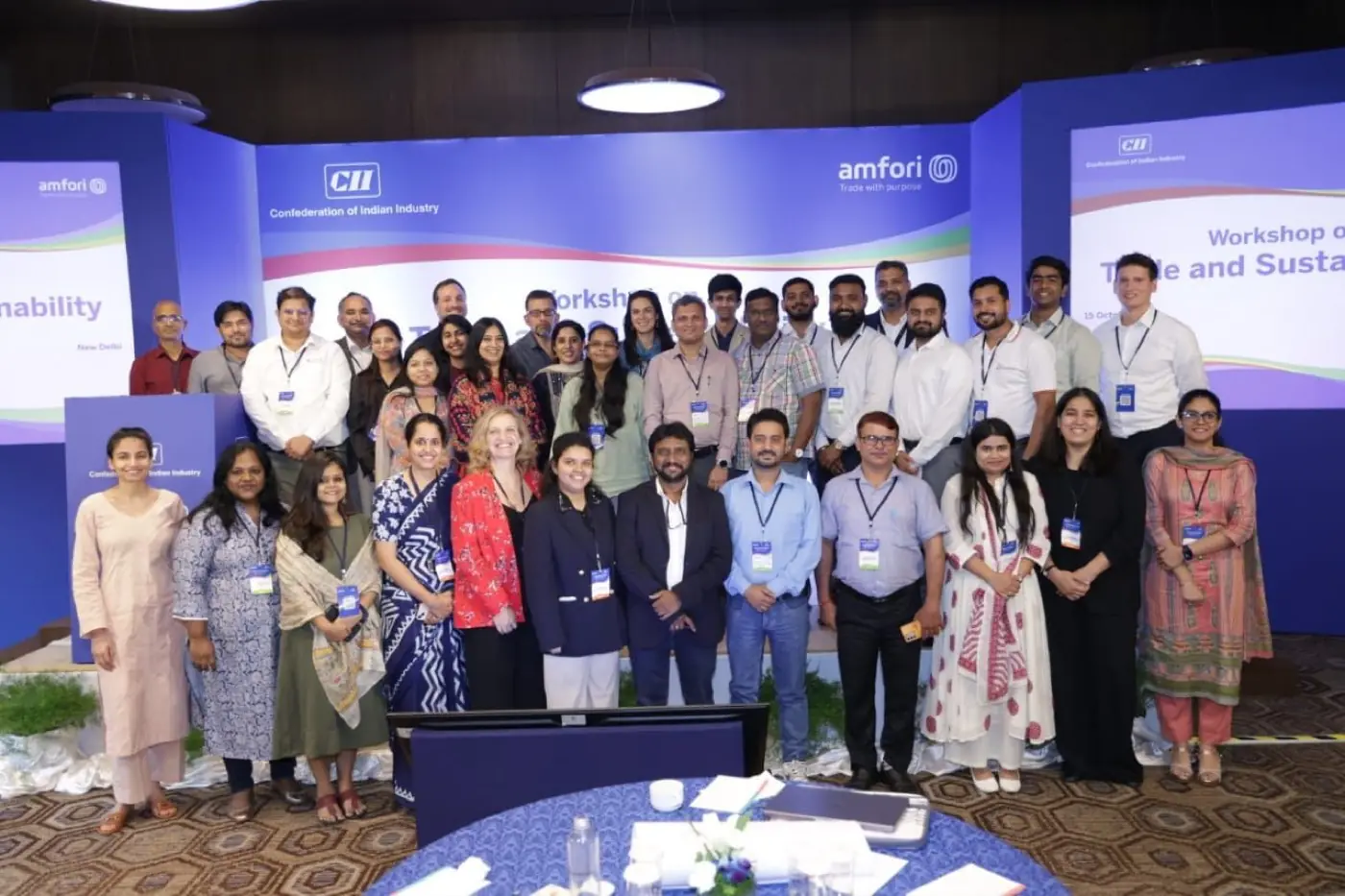
Participants at the amfori and Confederation of Indian Industry workshop on trade and sustainability
Trade and sustainability workshop, amfori and the Confederation of Indian Industry
Since 2022

Our journey in brief.

From a start-up programme to a practice that convenes policy dialogue.

  1. May 2022FoundedConceptualised at NSRCEL, IIM Bangalore.
  2. Sep 2024UNRBHR Forum, Asia-Pacific, 2024Delegate at the Forum in Bangkok.
  3. Nov 2024Women on BoardsFounder completes the ISDM programme.
  4. May 2025Research and partnershipsPolicy dialogue and academic research begin.
  5. 2025–26Flagship programmesNine convenings, workshops and consultations.
  6. Sep 2026Spotlight sessionHosted at the UNRBHR Forum, Asia-Pacific, 2026.
  7. Nov 2026UPCOMINGGovernance masterclassPoSH year-end consultation.

Read the full timeline

Our approach

A 3-part framework.

Our strategic advisory practice is grounded in Indian regulatory expectations aligned with global frameworks, regulations, standards and best practices.

  1. 01ArticulationScan the rules. Understand expectations. Assess risk.6 steps
  2. 02AlignmentEmbed in governance. Integrate into operations. Set accountability.3 steps
  3. 03ActualisationEngage stakeholders. Implement. Monitor and learn.3 steps
See every step of the framework
01
Articulation

Understanding the evolving regulatory landscape and human rights expectations, and applying contextual understanding of the problem statement by interpreting the applicability of the mandates.

  1. Scan and interpret evolving regulations and standards
  2. Understand human rights expectations and stakeholder perspectives
  3. Apply context to interpret mandates and identify key implications
  4. Translate mandates into context-driven insight
  5. Assess risks, impacts and opportunities
  6. Prioritise actions based on materiality and stakeholder input
02
Alignment

Embedding human rights into governance, policy and operations, ensuring that commitments are not only articulated at the top, but translated into consistent decision-making, accountability structures and everyday business practices.

  1. Embed into governance policies and frameworks
  2. Integrate into operations and decision-making processes
  3. Establish accountability structures and remedies
03
Actualisation

Translating intent, influence and integrity into on-the-ground practice across the workforce, supply chains and stakeholder ecosystems.

  1. Engage and collaborate across the workforce and stakeholders
  2. Implement actions and build capability
  3. Monitor, measure and learn for continuous improvement
Consulting expertise

Nine core consulting areas.

Our work focuses on the Social and Governance dimensions of ESG, where regulatory developments, responsible business conduct, organisational practices and stakeholder expectations intersect. See our practice areas

  1. Regulatory risk and compliance advisory

  2. Policy advisory, partnership strategy, strategic communication and advocacy

  3. Policy research, analysis and convenings

  4. Training and institutional capacity building

  5. Strategic programme design and implementation

  6. Multi-stakeholder engagement, facilitation and convenings

  7. Strategic convenings, partnerships and collaborations

  8. Governance and non-profit board leadership

  9. Prevention of Sexual Harassment of Women at the Workplace (PoSH) training and compliance support

Key focus areas
  • 01Business and human rights
  • 02Ethical and responsible supply chains
  • 03Due diligence and compliance
  • 04Labour rights and standards
  • 05Gender, diversity and inclusion
  • 06Governance and corporate accountability
  • 07Ethics, compliance and business integrity
Aligning with national and global frameworks

Indian regulation, read with global standards.

We align with local laws and regulations, the UN Guiding Principles on Business and Human Rights, the OECD Due Diligence Guidance for Responsible Conduct, and emerging international due diligence laws, requirements and regulatory mandates across jurisdictions.

See the frameworks
  1. 01Code on Wages, 2019
  2. 02Industrial Relations Code, 2020
  3. 03Code on Social Security, 2020
  4. 04Occupational Safety, Health and Working Conditions Code, 2020
  5. 05UN Guiding Principles on Business and Human Rights (UNGPs)
  6. 06OECD Guidelines for Multinational Enterprises on Responsible Business Conduct
  7. 07OECD Due Diligence Guidance for Responsible Business Conduct
  8. 08Business Responsibility and Sustainability Reporting (BRSR)
  9. 09National Guidelines for Responsible Business Conduct (NGRBC)
  10. 10ILO Labour Standards
  11. 11Corporate Sustainability Due Diligence Directive (CSDDD)
  12. 12EU Forced Labour Regulations and Guidelines (2026)
  13. 13Global Reporting Initiative Standards Development Consultations
Our strengths

Close to 20 years of experience.

A decade in knowledge, communication, strategy and partnerships.

See our strengths in detail

Experience

  • Regulatory risk and compliance advisory
  • Legal compliance management
  • Strategy, public policy and governance
  • Extensive network of partners and experts

Network, stakeholder relations & collaborations

  • Government
  • Private sector and businesses
  • Higher educational institutions
  • Law universities, academic research centres
  • Industry associations, business chambers, multi-stakeholder platforms
  • UN agencies
  • CSOs and NGOs
  • Social start-ups
  • Non-profit accelerator
  • SPO advisory boards

Decade in knowledge, communication, strategy & partnerships

  • Strategy development and consultation
  • Project management
  • Strategic partnerships
  • Brand positioning and strategy
  • Narrative building
  • Policy advisory
  • Stakeholder engagement
  • Institutional partnerships

Industries & sectors

  • Regulatory and tax practice
  • Legal technology (governance, risk and compliance management solutions)
  • Information services
  • SaaS and digital product management
  • Publishing
  • Social impact consulting
  • University
  • Public policy office
  • Social enterprise
Multi-disciplinary team

We strengthen corporate accountability by embedding responsible practices that uphold and protect the voices of rights-holders. We keep expanding our network.

We partner with lawyers, regulatory and compliance professionals, advocates specialising in labour and employment laws, workplace safety and investigations, remediation and grievance mechanisms, DEI, PoSH, policy experts and researchers, business and human rights specialists, sustainability consultants, SA8000-certified auditors, human rights due diligence (HRDD) experts, industry consultants with deep sectoral insights and experience, and academics working at the intersection of business and human rights.

Credentials

Registered. Empanelled. Contributing.

Registered
Ministry of Women & Child Development, Government of India
Empanelled
New Delhi Institute of Management for PoSH training and capacity building
Previously
Member of the Anti-Corruption Collective Action Working Group, UN Global Compact Network India (2022–2025)
Contributor
GRI standards consultations, UN Working Group on Business and Human Rights, European Commission
Advocate (non-practising)
Registered with the Bar Council of Delhi
Alumni
International Training Centre of the ILO (ITCILO) Alumni Network, member since 2021
The value we create

The value we deliver.

01

Regulatory risks & compliance advisory

Strengthen strategies, compliance systems, processes, practices and governance frameworks to identify, mitigate and manage legal, regulatory and human rights risks proactively.

02

Strategic consultation, policy communication, advocacy

Build resilient strategies that safeguard organisational reputation, strengthen stakeholder trust and support effective communication.

03

Knowledge, training, capacity building

Enhance organisational awareness, skills and capabilities through practical learning, guidance and capacity-building initiatives.

Contribution to standards and policy

Engaging at global and national level.

Read the full statement

P/ PRABHAVEE contributes to global standard-setting and policy processes, including regular participation in Global Reporting Initiative (GRI) standards development consultations, including consultation on the GRI Topic Standard Project for Labor, contributing to the evolution of key labor and human rights disclosures on: Non-discrimination and Equal Opportunity; Diversity and Inclusion; Labor Rights in Business Relationships; Freedom of Association and Collective Bargaining; Child Labor; and Forced Labor.

P/ PRABHAVEE contributes to national and international policy development through written submissions to the UN Working Group on Business and Human Rights; its contribution to the report to the 81st session of the UN General Assembly on Corporate Governance, Business and Human Rights; pre-forum consultations with UNDP’s Business and Human Rights Asia-Pacific Team in preparation for the annual UN Responsible Business and Human Rights Forums; and submissions to the European Commission on the EU Forced Labour Regulation and Corporate Sustainability Due Diligence Directive (CSDDD).

These engagements reflect a commitment to advancing responsible business conduct, strengthening corporate accountability, and integrating human rights due diligence into governance frameworks and business practices.

15policy and stakeholder consultations
7GRI standard development consultations
15workshops, capacity-building and learning initiatives
50+organisations engaged, including global collaborations
See the organisations we have engaged
  • 01United Nations Global Compact Network India
  • 02Centre of Ethics, Responsible Organisation & ESG initiatives (CERO), Management Development Institute
  • 03Good Business Lab
  • 04International Labour Organization (ILO) and Innovations for Poverty Action (IPA)
  • 05Young Leaders Council, All India Management Association
  • 06Safe in India Foundation
  • 07Teaching Business and Human Rights Forum
  • 08New Delhi Institute of Management
  • 09Centre for Excellence in CSR and Corporate Citizenship, IICA India
  • 10Indian Institute of Corporate Affairs (IICA)
  • 11Amfori & Confederation of Indian Industry
  • 12UN International Organization for Migration
  • 13Centre for Business and Human Rights (CBHR), Tamil Nadu National Law University
  • 14Change Alliance
  • 15Global March Against Child Labour
  • 16Yellow Spark Solutions LLP
  • 17BeatRoute
  • 18eLearnPOSH.com
  • 19India Partner Network (IPN), Sattva Initiative
  • 20G20 Women Entrepreneurship Platform (WEP), Niti Aayog, GoI
  • 21IMT, Ghaziabad
  • 22Indian Society for Training and Development
  • 23European Commission: Guidelines on the implementation of EU Rules on Forced Labor & CSDDD
  • 24Fair Wear Foundation
  • 25Global Reporting Initiative
  • 26UN Working Group on Business and Human Rights
  • 27Sustaim Consulting
  • 28EHS GURU Sustainable Solutions Pvt. Ltd.
  • 29United Nations Responsible Business and Human Rights Forum, Asia-Pacific
  • 30ATMA - An Accelerator for NGOs
  • 31Jindal School of Journalism and Communication
  • 32Asia Justice Coalition
  • 33New Imaginations: Centre for Peace, Conflict and Justice, JSJC
  • 34Human Rights & Corruption Working Group, UNCAC Coalition
  • 35O.P. Jindal Global University
  • 36SanatanApp Pvt. Ltd.
  • 37Jagriti Enterprise Centre - Purvanchal
  • 38Partners for Law in Development (PLD)
  • 39Southeast Asia Anti-corruption Syndicate (SEA Actions), Indonesia
  • 40Asian Forum for Human Rights and Development (FORUM-ASIA)
  • 41Jan Sahas' initiative- Migrant Resilience Collaborative
  • 42Partners in Change
  • 43Centre for Policy Research
  • 44Institute of Human Rights and Business (IHRB)
  • 45Janpahal
  • 46Centre for Financial Accountability Research
  • 47Law Chambers of Suruchi Kumar (SKLC)
  • 48Darbar Sahitya Sansada (DSS)
  • 49Centre for Social Justice (CSJ)
  • 50Institute of Law, Nirma University
  • 51Impact Consulting
  • 52Land Conflict Watch
Positioning in the ecosystem

Where regulation meets practice.

P/ PRABHAVEE envisions an integrated, legally informed, research-enabled model that brings together legal practitioners, CSOs, policy experts, communicators, academic researchers and business representatives. The aim is to improve disclosures by businesses and build capacity across the value chain.

Context & regulatory shifts
01

CSR Law (2013)

Companies must allocate 2% of average net profits for community welfare, a transformative benchmark in the region.

02

NGRBC and the National Action Plan (NAP)

India has released a zero draft of its National Action Plan on Business and Human Rights following multi-stakeholder consultations. The Indian Institute of Corporate Affairs (IICA) published the 2018 National Guidelines on Responsible Business Conduct (NGRBC), aligned with the 2011 National Voluntary Guidelines (NVGs) and the UNGPs. We actively follow this evolving space and look forward to its implementation.

03

Rising participation

CSOs, NGOs, human rights defenders, CBOs and other agencies are advancing workers' rights and grievances. Their work covers key areas like health and safety, worker well-being, responsible supply chains, grievance redressal, fair wages, workplace harassment, child and forced labour, and access to remedies.

P/ PRABHAVEE aims to bridge these gaps by fostering partnerships among lawyers, legal researchers and academic experts at the intersection of business, human rights and sustainability. We gather diverse perspectives, foster partnerships, and enable multi-stakeholder dialogue to drive legal, institutional and systemic reforms.

Key stakeholders
  • 01Civil society organisations
  • 02Academia and researchers
  • 03Legal practitioners
  • 04Businesses

Stakeholders are crucial for a collective, accountable approach, ensuring policy changes are grounded in legal rigour and real-world evidence.

Challenges we address
01

BRSR reporting quality

BRSR reporting is uneven, and non-financial data is under-disclosed. Despite government efforts, companies lack policy commitment and awareness of the NGRBC. They struggle to self-regulate with accurate, verifiable human rights disclosures.

02

Academic research gap

Civil society and CSR data lacks pathways into academic research, with minimal legal fraternity and faculty contributions.

03

MSME / SME capacity

SMEs and MSMEs lack awareness and legal capacity. They struggle with contractual liability, HRDD, procurement risks, purchasing practices and supply-chain human rights violations.

04

Fragmented legal expertise

Business and human rights expertise is scattered. In-house counsel, sustainability officers, commercial lawyers and human rights practitioners are not yet networked for a focused practice in India.

Our key initiatives
Our key initiatives
  1. 01Policy input and engagement with government and the private sector
  2. 02Stakeholder and public consultation
  3. 03Comments on draft regulations, guidance and standards development
  4. 04Collaboration with organisations to publish reports that drive policy change
  5. 05Dialogues, closed-door deliberations and public events
  6. 06Capacity-building workshops and training
  7. 07International forums, events and speaking engagements
  8. 08Mentorship and guest lectures for students and emerging industry leaders
  9. 09Participation in stakeholder interviews and surveys, contributing to industry reports
  10. 10Representation in conferences: ecosystem coalition and consensus-building
  11. 11Strategic consultations and advisory
Explore a partnership

Have a strategic priority in mind? Let’s turn intent into action.